Home Blog Page 77

Insurance Basics: Filing an Auto Insurance Claim After an Accident

0

4 minute read

To receive insurance benefits after an accident, you’ll need to file a claim. An auto insurance claim is a report you file with your insurance provider after your vehicle has been involved in a damage-causing accident. Depending on your coverage, a claim will typically result in a payout from your insurer after meeting any policy deductibles. Understanding how claims work can help make the overall process much less stressful.

How to File an Auto Insurance Claim 

According to the National Highway Traffic Safety Administration, over 5 million auto accidents are reported annually. Although every insurance provider handles claims differently, many of the key steps involved will be similar to those below. Here’s what you need to know.

Step 1: Safety First 

When involved in an accident, the first thing you should prioritize is your safety. Your body may react and want to run outside to assess the damage immediately. However, doing so too quickly may put you at risk of being injured by oncoming traffic or other hazards.

After ensuring the scene is safe, call the police. A police officer at the scene will aid in emergency services and conduct a police report, which will ensure your insurance provider obtains an official account of the accident. In the case of theft or vandalism, the police will also need to investigate to find the person responsible for the criminal act.  

Step 2: Gather Important Information 

a person taking photos of an accident before filing an auto insurance claim

While at the scene of the accident, your next step is to gather all relevant information to help your auto insurance claim.   

Begin by taking photos and video evidence of the accident. Photograph any damage done to all vehicles and property involved. In addition, write down the location and time of the accident. It’s important to photograph as many details of the accident as possible, so be thorough. If you’re filing an auto insurance claim due to a natural disaster, such as a fire or earthquake, wait until conditions are safe before collecting evidence.

Next, collect the information of any other drivers and individuals involved. This includes obtaining the following:

  • Driver’s contact information
  • Driver’s insurance information (provider and policy number)
  • Make and model of all cars involved
  • License plate numbers of all cars involved

If any witnesses to the accident can provide further details, get their contact information as well. Additionally, collect the contact information of any police officers that respond, which will make it easier for you to receive a copy of the police report.

You’ve likely been told before never to admit fault at the scene of a car accident—which is good advice. That being said, it’s best to let the professionals handle determining fault.

3. Contact Your Provider to File an Auto Insurance Claim 

Once you’re safe and have all the necessary information, contact your insurance provider immediately. Depending on your provider, you may be able to file a claim directly through your smartphone app or carrier’s website. Once in contact, explain to your insurer what occurred and hand over any information you collected at the scene.

a claims adjuster reviewing a vehicle

Once in contact, your provider will assign a claims adjuster who will review the accident and assist you throughout the claims process. The role of the claims adjuster is to determine the value of damage caused by the accident and what the appropriate compensation should be based on your policy. They may also assist with coordinating a vehicle inspection with an associated mechanic. The claims adjuster is your point of contact regarding your claim, so don’t hesitate to ask any questions you may have.

It’s important not to delay contacting your insurance provider or agent after an accident, as some providers may have strict deadlines for filing claims.

4. Your Options for Getting Back on the Road 

Once your vehicle has been inspected, you’ll better understand what your next step will be.

a person shaking hands with a mechanic

If the damage is repairable, the claims adjuster will put you in contact with body shops to repair your vehicle. Insurance providers may pay the auto body shop directly or provide you with the funds to handle the bill. Any payouts will ultimately depend on your policy, the specifics of the accident, and damage sustained.

If the cost to repair your vehicle exceeds the car’s value, your car will be classified as a total loss. With collision insurance, your insurer will compensate you—or the lienholder if financing or leasing the vehicle—for the actual cash value, which is the car’s market value at the time of the accident. 

If you have rental reimbursement coverage, your provider will help cover the cost of a rental car while your vehicle is repaired, up to the coverage limits

Will My Auto Insurance Rate Increase After a Claim? 

After filing a claim, your insurance rate could increase. Any rate increase will depend on various factors, such as driving history and who was at fault in the accident. 

If you were found not at fault, you’ll likely see little to no change in your rate. However, you can expect a rate increase if you were found at fault in an accident. Should your rate increase, you could use the opportunity to compare quotes to find a new auto policy.

AIS Is Here to Help

Although some aspects may differ depending on your insurer, the basic steps for filing an insurance claim are typically similar across carriers. However, how much damage is covered and who pays for the damage will depend on where you live and the specifics of your policy.

While the claims process is handled between you and the insurance company, your agent is there to assist if needed, whether you need to replace your vehicle or have trouble reaching your adjuster. Even if you haven’t been involved in an accident, it’s important to routinely review your insurance policy to ensure you’re getting the best combination of coverage and price. At AIS, we make it easy to compare auto quotes from our network of insurance partners, helping you benefit from any potential saving opportunities.

To learn more about the coverages available to you, give our insurance specialists a call today at (888) 772-4247.


The information in this article is obtained from various sources and offered for educational purposes only. Furthermore, it should not replace the advice of a qualified professional. The definitions, terms, and coverage in a given policy may be different than those suggested here. No warranty or appropriateness for a specific purpose is expressed or implied.

Best Car Insurance For College Students in 2022

0


Compare Personal Loans With Our Partners: ? Compare on Bankrate https://infoforinvestors.com/go/bankrate-auto/?sub_id=YT …

You Won't BELIEVE Which Princesses Are MISSING From The Wreck-It Ralph 2 Sleepover

20


Why were some Disney Princesses missing from the Wreck it Ralph sleepover picture?? Subscribe: http://bit.ly/TheThingsSub WATCH MORE: New Videos!

Healthcare Policy Innovations: Bethany Hays, MD

0


Bethany Hays, MD, describes how a standalone, multispecialty center (called the True North Health Center) uses innovative organizational and payment …

What Is Return of Premium Life Insurance? | Quotacy Q&A Fridays

1


Wondering what return of premium life insurance is? In this video, Jeanna and Natasha from Quotacy explain how return of premium life insurance works in both …

What Is PIP Auto Insurance? : Insurance Info

1


Subscribe Now: http://www.youtube.com/subscription_center?add_user=ehowfinance Watch More: …

Peppa Pig BUYS a LAMBORGHINI!

20


Welcome to my 10th Peppa Pig Try Not To Laugh Montage on the Channel! This time its a video on the Peppa and family borrowing a Lamborghini! Make sure …

SBI LIFE INSURANCE INTERVIEW : Insurance Agent interview : Life Insurance

20


www.pdclassessgnr.com SBI Life Insurance is a joint venture (BNP Paribas Cardiff holds 26% of the total capital in SBI Life Insurance Company while SBI holds …

7 Safety Tips Every Professional Truck Driver Should Follow

0

4 minute read

Driving a commercial truck professionally requires a great deal of skill and responsibility. As the backbone of our economy, it’s no doubt that truck drivers spend long hours on the road and under tight schedules. While deadlines are important, the safety of truck drivers is more important – not just for their well-being but because their safety impacts other motorists on the road. Below are the safety tips every truck and bus driver needs to know to protect themselves and others on the road.

1. Practice Defensive Driving

The best way to protect yourself and others while on the road is through defensive driving. When you can anticipate a possibly unsafe situation, it’s easier to avoid it and steer clear of the danger ahead. Here are some tips to follow:

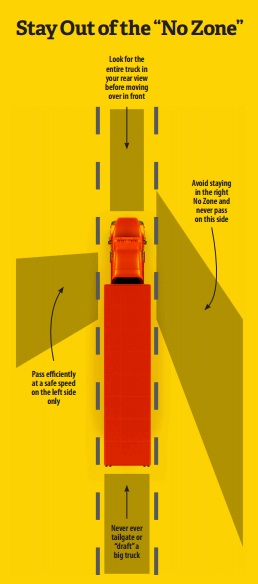
Stay out of the "no zone" infographic
Image: Glotzer & Kobren
  • Travel slowly. Always take the corners and exit/entrance ramps very slowly. The posted speed limit is intended for regular-size cars, not for big rigs. Additionally, you should never go above second gear in a parking lot.
  • Always signal. Remember that signaling before changing lanes or turning is required by law. Use the “Take 10” rule, which is to turn on your signal for three seconds while checking mirrors and take seven seconds to change lanes.
  • Watch your blind spots. According to the NHTSA, over 840,000 accidents per year are directly due to drivers changing lanes. Before starting your trip, adjust your mirrors. Know the “no-zone” blind spots and exercise caution before turning or changing lanes.
  • Maintain space cushion. Since large trucks require more stopping time due to their load weight and vehicle size, keep a safe distance of seven to eight seconds between you and the vehicle in front of you.
  • Scan ahead.  Pay attention to what’s going on a quarter of a mile or more ahead of you. By being aware and practicing situational awareness, you can prevent accidents altogether or, at the very least, decrease the impact if an accident does occur.
  • Pay attention to signs and directions.  Road signs help us navigate lawfully and safely. They play a significant role for every driver, so it’s essential to regularly check and pay attention to them.
  • Avoid distractions. Distracted driving is one of the greatest threats to your safety and the safety of others on the road. Pay attention to everything and avoid using your cell phone at all times.

2. Plan Your Trip

Before heading out onto the road, plan your route with care. Conduct some research to stay up to date on road conditions, weather, traffic patterns, constructions, and road laws that vary by state. Investing in a trucker’s GPS is recommended to help alleviate stress on the road, especially when traveling to unfamiliar places. This gadget can provide vital information such as which exit to take, the distance before an exit, traffic reports, and real-time weather and road conditions.

3. Pre & Post Trip Inspection

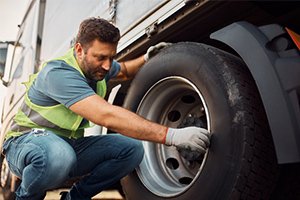
truck driver inspecting tires

A comprehensive pre-trip and post-trip inspection are essential for spotting defects before your big rig becomes a threat to your safety. Not only can it help ensure your fleet of trucks are safe before you start driving, but inspections are required at least once daily during work hours by the DOT. During your inspection, pay close attention to your braking system, steering system, fifth wheel assembly, lights, and tires.

4. Prepare for Dangerous Road Conditions

Road conditions are constantly changing and can be a danger to all drivers. Learn how to drive and navigate through some of these most common and dangerous driving conditions:

  • Road construction
  • Accidents
  • Disabled vehicles
  • Animal on the road

5. Invest in a Dash Cam

To protect yourself from unjust accusations, increased insurance costs, and potential termination by your employer, purchase a dash cam. Determining who is at fault in an accident or figuring out what happened during the accident gets murky. Luckily, dash cams can remove the guesswork of what actually happened and can protect you as a truck driver both legally and monetarily.

6. Perform Regular Truck Maintenance

On-time deliveries are key to driving a successful trucking business. While there are factors out of everyone’s control that can cause delays, you can take responsibility for the one factor you can control, your fleet. Keeping a regular preventative maintenance schedule is essential for the following:

  • Meeting DOT regulations
  • Avoiding costly repairs
  • Increases the lifespan of your truck
  • Safety for all

7. Rest and Take Your Breaks

commercial trucks at rest area

While meeting deadlines is important, it’s crucial to meet rest and break requirements. Driver fatigue is one of the leading causes of accidents in the trucking industry. Under Hours of Service (HOS) regulations, all commercial truck drivers are required to take certain breaks before they can continue driving. Getting enough rest can help you avoid driver’s knee and ensures that you make it home safely.

Customized Your Truck Insurance With AIS

AIS Insurance has been providing affordable commercial insurance coverage for over 20 years. We work with “A” rated insurance companies to get you the lowest rates on your commercial auto or truck insurance. Speak with one of our Commercial Insurance Specialists today at (855) 919-4247 for a fast and free commercial insurance quote and see how much you can save.


The information in this article is obtained from various sources and offered for educational purposes only. Furthermore, it should not replace the advice of a qualified professional. The definitions, terms, and coverage in a given policy may differ from those suggested here. No warranty or appropriateness for a specific purpose is expressed or implied.

kahin Bimari Majboori Na Ban Jaye: Compare & Buy Health Insurance On Policybazaar.com_15Sec

0


Kahin Bimari Majboori Na Ban Jaye: Aaj hi #healthinsurance compare karo at Policybazaar.com. Compare & Buy health insurance and get trouble-free inpatient …

Daughter of 'Putin's Rasputin' Alexander Dugin killed in mystery Moscow car bomb

0


A car bomb near Moscow has killed the daughter of the ultra-nationalist Russian philosopher behind Vladimir Putin’s aggressive …

Term Insurance In Telugu – Term Plan With Return Of Premium | Premium Back Life Insurance | Kowshik

20


??????????? ??????? ?????????? ????????? ?????????! ???????? ????????? ??????? ??????? ?????????????! ????.

How to Winterize Your RV in 7 Easy Steps

0

4 minute read

For many RVers, the adventure season comes to an end just as colder temperatures move in. While winter RVing can be a unique experience, the additional requirements and RV modifications it requires may only be practical for some. If you live in an area prone to freezing temperatures, it’s essential to properly winterize your RV for the cold months. Failing to do so could lead to costly repairs like busted pipes. 

Need help winterizing your RV? Follow this guide to learn the basics of storing your RV during winter.

Why Do I Need to Winterize My RV? 

Any water left in your RV’s plumbing system can freeze if the proper precautions aren’t taken during the winter. When this happens, the frozen water can expand and severely damage your RV’s pipes, water tanks, and fittings. Therefore, if you live in an area where temperatures can fall below 32 degrees Fahrenheit, it’s best to winterize your RV annually.

As a general rule, plan to winterize your RV well before temperatures drop into the low 40s/high 30s. That way, you have plenty of time to make the proper adjustments. 

If below-freezing temperatures are rare or unlikely where your live, fully winterizing your RV may not be necessary. However, it’s still important to take the time to properly inspect and perform routine maintenance on your rig when preparing to put it in storage for an extended period.

How to Winterize Your RV 

Step 1: Drain RV Water Supply 

As mentioned, the most crucial step to winterizing your RV is removing any water that could freeze and damage your RV’s plumbing systems.

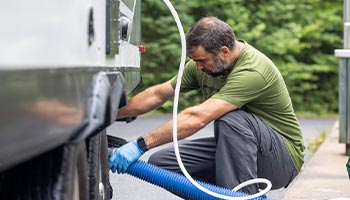
We’ll begin by draining all liquids from your RV’s water heater and holding tanks, including the freshwater, greywater, and blackwater tanks. Your freshwater tank can be emptied, but you’ll need to flush and clean your grey and black water tanks to prevent bacteria or mold growth.

Some RVs come equipped with a built-in flushing system, making the job easy. If your RV doesn’t have a built-in flushing system, you’ll need to use either a flush wand or an RV reverse flush valve.

Before moving to the next step, you’ll still need to empty the remaining water throughout your RV appliances, such as your sinks, showers, toilets, and more. To drain the remaining water, go around your RV, open all faucets and flush your toilets multiple times until dry.

Step 2: Add Antifreeze to Your RV 

Adding antifreeze is highly recommended if your RV will be stored in harsh winter conditions. However, before adding antifreeze to your RV, you’ll want to ensure that you bypass the water heater. Failure to do so will result in your water heater filling up with antifreeze. Some RVs come with a bypass feature installed. You’ll need to install a bypass kit if your RV doesn’t.

To add antifreeze:

  • Disconnect your RV’s water line and put one end of the tube into the antifreeze container.
  • Activate your freshwater pump to allow the antifreeze to travel throughout your RV.
  • Once pressure has built, turn on your RV’s faucets and flush your toilets until antifreeze appears.
  • After this, turn off the water pump and reconnect your water line to the freshwater tank.

Step 3: Clean RV Interior 

Once your RV is protected against freezing damage, clean and remove excess cargo from your RV’s interior. Since your RV will be out of use for an extended time, remove all food and temperature-sensitive materials from your rig. You can also use this time to give your RV a deep clean, so it’ll be ready for the next season.

Step 4: Remove and Store RV Batteries

To properly winterize your RV, you’ll also need to remove and store your RV’s batteries. RV batteries can be damaged during harsh winter conditions, so removing and keeping them in an area away from the cold is recommended. However, suppose you live in an area that does not freeze. In that case, you can disconnect the battery cables when preparing to store your RV for an extended period.

Step 5: Protect Your RV’s Exterior 

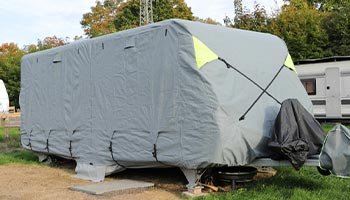
The next step to winterizing your RV is to ensure uninvited guests (critters, pests, debris) don’t find a way into your RV. Begin by reinforcing your RV’s vents. If exposed, these can be prime entry points for bugs, snow, and humid air. Adding vent covers to each opening and double wrapping in plastic can add extra water protection.

In addition, inspect your RV for cracks or openings alongside your windows and door frames. If any are found, use caulking to fill the seal.

Step 6: Place RV on Leveling Blocks 

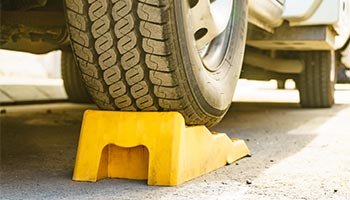
If your RV is left parked for an extended period, its tires may develop “flat” spots due to the heavy weight of the RV. This can lead to tire damage and blowouts once you begin using your RV again in the springtime. To prevent any issues, we recommend using RV blocks to distribute the weight of your RV evenly.

Step 7: Add RV Skirting 

Now that you’ve drained your tanks, sealed any openings, and leveled your RV, your final step should be to add RV skirting to further protect your RV’s underside. RV skirting is designed to insulate the bottom of your RV by preventing cold air from traveling underneath your rig. 

While not always required, installing RV skirting will provide your pipes with an extra level of protection against frost damage. RV skirts can come in a wide range of materials, such as foam boards or puncture-resistant vinyl.

Save on RV Insurance During the Off Season 

Carrying RV insurance throughout the year is essential to protect your rig while you’re off adventuring. However, did you know it’s possible to save money on RV insurance during winter by switching to a storage-based policy? Depending on your policy, this option could help you save significantly. If you want to learn more about how AIS can help you save on RV insurance, call one of our insurance specialists today at (888) 772-4247.


The information in this article is obtained from various sources and is offered for educational purposes. Furthermore, it should not replace manuals or instructions provided by the manufacturer or the advice of a qualified professional. No warranty or appropriateness for a specific purpose is expressed or implied.
Auto Insurance Agency Miami Florida Call 3058422575

0


http://www.allstateagencies.com/michaelmartinez, We are your Auto Insurance Agency in Miami Florida. Call Us Today at …

Blue Cross Blue Shield Medicare Supplement Review

0


http://www.abtinsuranceagency.com Reviewing Medicare Supplement Plans offered by Blue Cross Blue Shield. Watch and learn!