There are endless reasons to be excited about a fresh set of keys, whether it’s the updated technology and safety features or that famous new car smell. However, despite the excitement, it’s no secret that a new car is a costly purchase. And with ongoing market and supply disruptions, the auto landscape has been in a significant flux. Still, if you find yourself in the market, understanding the difference between leasing and buying a car can make a difference in how much you spend. Follow this guide to learn the pros and cons of each decision to determine if you should lease or buy a car.
Should I Lease or Buy a Car: What’s The Difference?
Leasing a Car
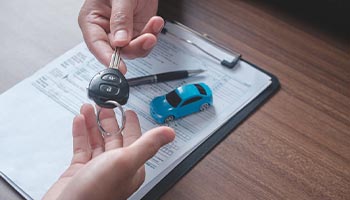
When you lease a vehicle, you pay to drive the car for a predetermined number of miles and time (typically 2-3 years). Then, at the end of the lease, you return the car to the dealer. Simply put, leasing a car is a way to rent a vehicle for an extended time. Although leasing requires monthly payments, these payments do not go toward vehicle ownership. Some contracts allow you to purchase the car at the end of your lease.
Buying a Car
Buying a car is a much simpler process. You can either pay the car’s total price upfront or finance the purchase through a lender. If you decide to finance, you’ll need to make a down payment in addition to monthly payments (with interest) until the loan is paid off. From there, you can continue driving the vehicle for as long as you’d like while being free to sell or trade it at any time.
Leasing Vs. Buying a Car: Pros and Cons
Pros of Leasing a Car
A new car every few years – If you enjoy having the latest features and tech in your car, leasing is one way to frequently change the vehicle you drive. Once your lease is up and you return the car, you can move on to a newer model.
Lower monthly payments – When compared to buying a car, leasing typically involves a smaller down payment and lower monthly costs. Because of this, you may be able to lease a higher-end vehicle that you could not afford to purchase.
Warranty-covered maintenance – When you lease a new car, it’ll likely still be under warranty, which can help you save on some basic maintenance costs. Be sure to double-check your contract to understand what is covered.
Cons of Leasing a Car
No ownership – One of the most significant drawbacks to leasing is that you do not own the vehicle despite making monthly payments and maintaining it. Once the lease ends, you must return it to the dealership.
Never-ending payments – If you lease every vehicle you drive, you will constantly make monthly car payments.
Restrictions – Most lease contracts include mileage limits which could restrict how much and how far you drive. Additionally, suppose you make any modifications to the vehicle. In that case, you’ll likely be charged a fee when you turn the car in.
Fees and extra costs – Although leasing a car can be cheaper than buying, there are still a handful of fees that can raise the final price of a lease. You may face fees for exceeding your mileage limits, causing extra wear and tear, or for terminating a lease early.
Pros of Buying a Car
Long-term cost – Although monthly payments may be cheaper on a lease, in the long run, it is typically cheaper to buy a car and hold onto it for the duration of its life.
Total ownership – Because you’re purchasing the car, you can modify the vehicle however you’d like.
Upgrading – Once the car is yours, you can sell or trade it for an upgraded vehicle.
Cons of Buying a Car
Loans and credit – Unless you pay for it in full, you’ll need to finance your car’s purchase by getting a loan. This means you’ll be paying interest on the car’s original price.In addition, failure to make your payments on time could affect your credit score.
Value depreciation – Unfortunately, your car will decrease in value when you drive it off the car lot. Unlike homes, you probably won’t profit when you sell your car down the road.
Higher payments – When compared to leasing, financing a car will typically involve higher payments.
Should I Buy or Lease a Car?
The decision to lease or buy will ultimately come down to your finances and personal needs. For most consumers, buying makes the most financial sense and according to market data, drivers understand this. In July 2022, leases comprised less than 20% of the auto market. Still, there are a few scenarios where leasing can be a better option than buying.
If you find yourself in one of the following situations, leasing may be worth considering:
You only need a car for a short amount of time – If you’re an expatriate or if you only need a car for a few years, leasing can provide you with driving access without the responsibility of being a car owner.
You’re unable to cover monthly payments – If you cannot afford the monthly payments on a car loan, you may be able to save significantly by leasing, depending on the car model.
You’re an older driver – Senior drivers with low annual mileage and a fixed income may benefit from leasing a car instead of buying one. By leasing, they can take advantage of the latest safety features and not have to worry about extensive maintenance.
What About Insurance?
You will still need to purchase auto insurance regardless of whether you lease or buy a car. Nearly every state requires drivers to carry liability insurance, which helps pay for injuries and damage you cause to someone’s property. If you lease or finance the car, your contract may require you to carry additional coverage types, such as:
Comprehensive and collision coverage – Covers physical damage on a vehicle caused by an accident, natural event, or vandalism.
Gap insurance – Depending on your contract, you may also be required to purchase gap insurance, which covers the gap between the vehicle’s actual cash value and what you owe.
Whether you have your eyes set on a specific model or just browsing, it’s always a good idea to compare auto insurance rates before heading to the dealership. That way, you can better understand what you can afford and be one step closer to driving your dream car off the lot. At AIS, comparing quotes from our network of providers is a quick and easy process. To learn more about the coverage options available to you, give us a call at (888) 772-4247, or start a free quote online today.
The information in this article is obtained from various sources and is offered for educational purposes. Furthermore, it should not replace manuals or instructions provided by the manufacturer or the advice of a qualified professional. No warranty or appropriateness for a specific purpose is expressed or implied.
George is working at the popcorn stand when he gets distracted with bird watching. Meanwhile, a situation crops up in the stand that might end up helping his …
In this video we will learn about Whole Life Insurance Cash Value. – What is it whole life insurance cash value? Whole life insurance has a savings component …
SUBSCRIBE NOW ! ENJOY Subscrible , activate the notification, and enjoy the whole experience. This 3D Side by Side (SBS) video can be watched on your 3D …
“There is no better feeling than that of pride, knowing that the work you do puts a smile on the faces of millions. So, join the #IamExideLife movement and spread …
If you’ve rented a car before, then you’ve been warned at the counter of the dangers of declining a company’s rental car insurance. And when in vacation mode, it’s easy to doubt what amount of coverage you may already have. However, in some cases, your current auto insurance policy could provide the protection you need. Understanding how rental car insurance works and what it covers could help you save the next time you need a rental.
What is Rental Car Insurance?
When renting a car, the rental company will provide you with various insurance coverages that you can choose from to protect yourself and the vehicle. Although coverage types may vary, you’ll typically see the following:
Supplemental liability protection – covers damage or injuries you cause to others while driving the rental.
Loss damage waiver (LDW) – sometimes also referred to as a collision damage waiver (CDW), this type of “coverage” isn’t technically insurance. Instead, it is a waiver that releases you from being responsible for damage sustained to the rental, including theft.
Personal accident insurance – provides coverage against injuries to you and your passengers while driving a rental.
Personal effects coverage – covers any personal items stolen from the rental up to a specific limit.
Important note: Remember that rental car insurance differs from rental car reimbursement coverage. A rental company offers rental car insurance to protect yourself financially when renting a car. Rental car reimbursement, however, is an optional coverage you can add to your auto insurance policy to cover the cost of a rental while your vehicle is repaired after an accident.
Does My Personal Auto Policy Cover Rental Cars?
If the coverage types listed above sound familiar, that’s because they’re designed to mimic the types of coverages found on standard auto insurance policies. Because of this, drivers with robust auto insurance may already find themselves with adequate coverage when renting a car.
In most scenarios, your current auto insurance policy will provide you the same coverage for a rental vehicle as long as you rent it within the U.S. for personal reasons. For example, suppose you carry collision and comprehensive insurance. In that case, your rental will likely be covered from physical damage if it is of similar value to your own vehicle (up to your policy’s limits).
Insurance coverage can vary depending on your provider, so always double-check with your insurance agent before declining additional rental coverage. Additionally, the rules can differ if you use the rental vehicle for business purposes. Check with your insurer or employer for coverage details when renting a car for business.
Keep in mind that if you get into an accident in a rental, you’ll still need to settle any deductibles and file a claim with your provider.
Does My Credit Card Provide Rental Car Insurance?
Many major credit card companies include rental car insurance as one of their benefits for cardholders. Still, this doesn’t apply to all cards, and any coverage provided is typically secondary insurance. That means your insurance will be billed first, so you’ll still need to file a claim. Furthermore, credit card companies may have additional requirements to be eligible for their rental car insurance, such as paying for the rental with the card in full.
Before declining coverage, discuss specific coverage requirements and restrictions with your credit card company.
Rental Car Insurance Vs. Your Personal Auto Insurance
Not sure if your auto insurance policy provides enough coverage? Here are common insurance scenarios you may face and how to determine if you’re already covered through a personal policy. Important note: always double-check with your insurance agent to ensure your coverage extends to rentals.
Collisions and Theft
Rental companies: A loss damage waiver (LDW), also called a collision damage waiver (CDW), protects you against being financially responsible for damagesustained to a rental, including theft. Typically, these waivers can cost around $10 to $45 a day, making them a costly add-on. Coverage may sometimes exclude specified parts on the vehicle, such as tires or the windshield.
Your auto policy: If you carry collision and comprehensive coverage, coverage will usually extend to a rental car as long as you rent within the U.S. and Canada. Should you be involved in an accident, you’ll still be responsible for your deductible and filing a claim with your provider.
Damage You Cause to Others or Property
Rental companies: To cover any damages you cause to others or their property, rental car companies offer supplemental liability protection. Limits can range between $300,000 and $1 million, which may be worth it for those with low liability limits.
Your auto policy: Nearly every state requires drivers to carry their state’s minimum liability requirements, so you likely already have some amount of liability coverage. Depending on your carrier, you should have equal liability coverage when renting a car within the U.S. and Canada.
Injuries to You
Rental companies: Personal accident insurance can help pay for your or a passenger’s medical bills after being involved in a rental car accident.
Your auto policy: If you have medical payments coverage or personal injury protection on your policy, you likely already have comparable coverage to what a rental company may offer you. In addition, your health insurance can help cover medical costs after an accident.
Stolen Personal Items
Rental companies: Opting for personal effects coverage at the counter can provide some protection if any of your items are stolen from your rental car.
Your auto policy: Your auto insurance will not cover personal items stolen from a vehicle. However, a renters or homeowners policy may cover personal belongings even if the items weren’t stolen on your property.
When Is Rental Car Insurance Worth It?
If you have a robust auto insurance policy that extends to rentals, rental car insurance is rarely worth it. However, rental car insurance may be worth considering if any of the following scenarios apply:
You don’t have an active auto insurance policy.
You only carry your state’s minimum liability limits.
You don’t have collision or comprehensive insurance.
You don’t have renters or homeowners insurance.
You’re traveling overseas or to a country where your policy won’t cover you.
You want to avoid paying a deductible or filing a claim if you damage a rental car.
Review Coverage Options with an Insurance Specialist
Looking to change providers or review coverage options but not sure where to start? AIS can help! Our specialists can answer any questions you have regarding auto insurance and specific coverage types—they may even be able to find you additional savings. So, if you want to compare quotes among our network of providers, call (888) 772-4247 or start a quote online.
The information in this article is obtained from various sources and offered for educational purposes only. Furthermore, it should not replace the advice of a qualified professional. The definitions, terms, and coverage in a given policy may be different than those suggested here. No warranty or appropriateness for a specific purpose is expressed or implied.
I know this is probably a longer video than you expected but trust me you have to watch the whole thing to understand the Health Insurance in the . There is …
Wife hilariously covers her husband’s Nissan Qashqai car in pictures of herself for Valentine’s Day prank Original video: http://dailym.ai/2BvAJZ9 Full story: …